8 Ways to Get VCs to Reach Out to You

Most of the fundraising advice we’ve shared so far focuses on building a target list, getting warm introductions, sending cold emails, and what to say in VC meetings. You should do all of those things.
But there are also ways to make it easier for investors to find and reach out to you.
VCs are always looking for “hot” companies. They ask other investors what they’re seeing. They scroll LinkedIn. They attend conferences. They talk to founders and operators. Increasingly, they also use software to identify companies showing early signs of momentum. So how do you get on their radar? Here are 8 ways:
1. Bring on great people and make them visible
One of the signals investors pay attention to is talent. If talented people are leaving their jobs to join your small startup, that gets investors' attention. They presumably had other options, so their decision to join you signals something about what they believe you’re building.
The same goes for advisors. If a respected person in your industry is willing to put their name and reputation behind your company, that can be a meaningful signal, especially when you’re early and don’t have years of traction to point to yet.
When you make an exceptional hire, announce it, and encourage that person to announce it too. A LinkedIn post from your new executive explaining why they joined your startup is great reach. Ask your team, advisors, and existing investors to engage to boost its reach.
2. Co-host a small dinner
Partner with another well-respected leader in your category and host a dinner together. Invite 8–12 interesting people: founders, operators, customers, researchers, industry experts, and a couple of investors. Don’t make it a fundraising dinner.
Make it a genuinely good dinner with people who have something interesting in common. If you’re building the future of fertility care, cybersecurity, AI infrastructure, or whatever your market is, you want to become someone who brings together the smartest people thinking about that space. That creates relationships and credibility in a way that emailing an investor asking for 30 minutes simply doesn’t.

3. Publish original research and data
Reporters love data because new data is, quite literally, news. And as a startup, you may have access to interesting information that no one else does. You can analyze your own aggregated data or commission a survey to answer a question people in your industry are already asking.
Parsley Health, for instance, commissioned a survey of 1,200 full-time, insured women about their health concerns and barriers to care. They found that about 8 in 10 women said they delayed care until their symptoms worsened or interfered with daily life, and 43% had recently missed at least a day of work because of health issues. They shared the story with the press, and it was picked up by outlets like Fierce Healthcare and Vogue.
You don’t need millions of users or a giant research budget to do this. Think about what you know, or could learn, that the rest of your industry would find interesting. The best research reveals something surprising, timely, or counterintuitive and gives reporters an actual story to tell.
Of course, be rigorous about your methodology, especially if you’re working with health data. Being seen as a thought leader is a bonus, but the real goal is to uncover something useful to others in your space and share it.
4. Celebrate your wins out loud
Building a startup is hard, so don't be shy about sharing the good stuff. Not every post needs to be a major announcement, either. Some of the best content simply gives people a window into what’s happening inside the company and creates a steady drumbeat of progress.
That might include:
A new customer, partnership, product launch, or growth milestone
A customer testimonial, review, or comment that made your day
A behind-the-scenes (BTS) look at your team celebrating a win in Slack
A team photo from an offsite, conference, or day at the office
An interesting customer insight or surprising piece of data
A lesson from something that didn’t work
LinkedIn is particularly useful because so many investors are already there. But don’t make the company account do all the work. Personal accounts receive more engagement than corporate pages, and also give investors a much better sense of the people behind the company.
Joanna Strober of Midi offers a master class in this. She shares the big stuff, of course, but also the smaller moments that make you feel like you’re watching the company being built in real time.

And don’t think only about what you post yourself. Follow investors you would eventually like to know and thoughtfully engage with what they share. If they post about something you know well, add a useful data point, offer a different perspective, answer a question, or share something you’ve learned from customers.
One more thing: make sure your LinkedIn settings actually allow people you don’t know to contact you!
5. Go where investors already are
Conferences can be incredibly useful for running into investors. You don’t necessarily need to be on the main stage at HIMSS or the Rock Health Summit. A thoughtful panel, smaller industry event, or niche gathering where the right investors spend time can get you noticed.
I have mixed feelings about renting a booth. Depending on the conference, it’s likely more helpful for connecting with customers than investors. Plus, the most valuable parts of a conference tends to be the dinners, coffees, and conversations happening around it. You want to create opportunities for investors to encounter you and your company.

6. Apply for awards and “companies to watch” lists
There are a million startup awards, and most aren’t worth your time (or money). But there are a handful of lists that people in our industry actually read and share. Getting on one can make your company visible to investors who have never heard of you. A few worth knowing:
Many of these lists accept applications or nominations, so identify the best fits and add their deadlines to your calendar. Be selective, and be very wary of those that charge a fee.
7. Make your company easy for investor sourcing tools to find
There is an entire technology stack built around finding promising companies before everyone else. Investors aren't relying solely on introductions and conferences anymore.
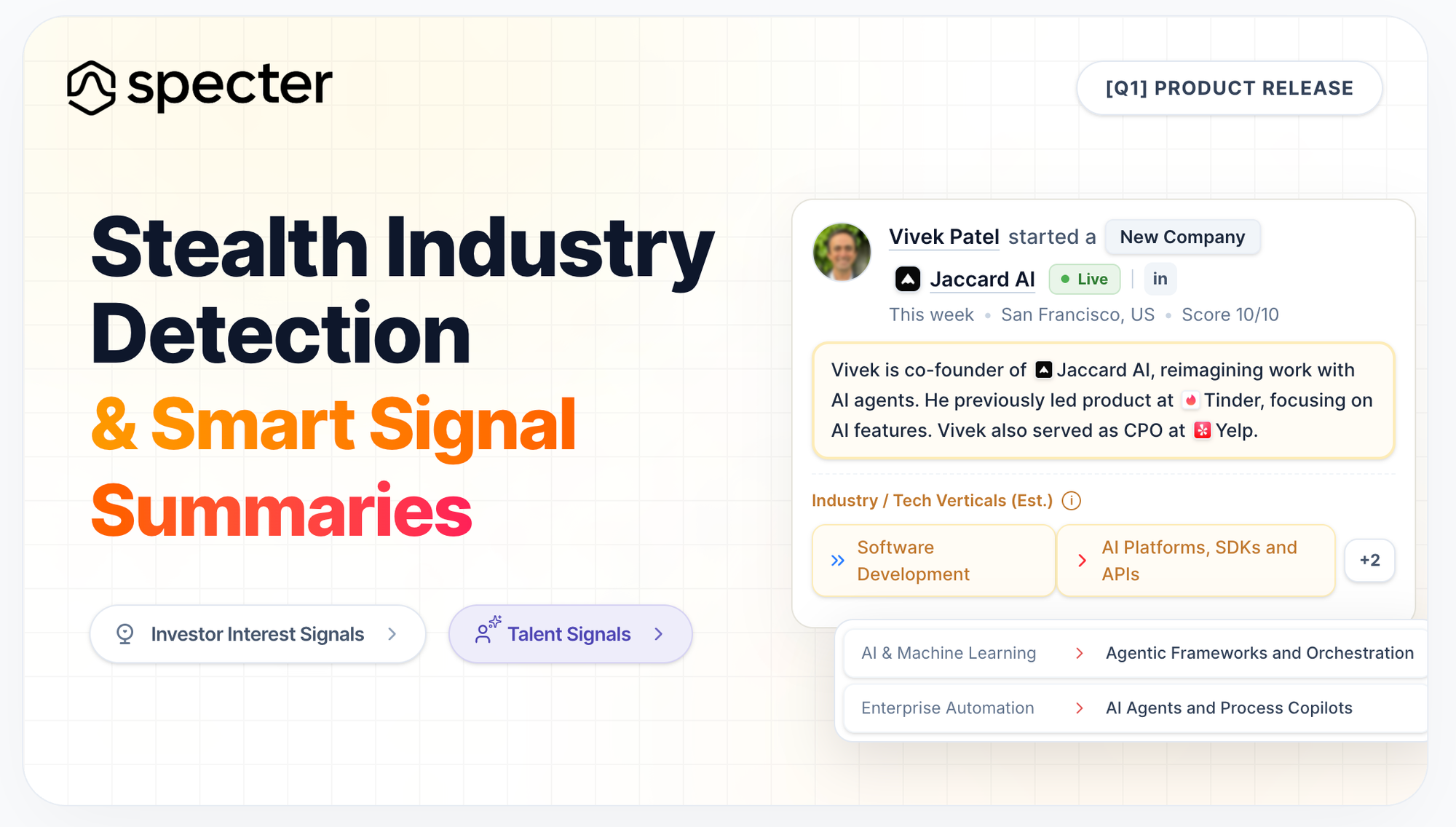
One example is Specter, a platform investors use to discover and track private companies. It monitors signals including team growth, web traffic, social growth, revenue, funding, and investor interest. Crunchbase is another obvious place investors go to research companies and their financing histories.
The practical takeaway is to make sure your company’s digital footprint is accurate and current. Keep your website, LinkedIn page, and Crunchbase profile up to date, including your company description, founding team, and funding history. And remember that many of the things we’ve already talked about, from hiring great people to generating press and growing web traffic, can become signals inside the tools investors use to find companies.
8. Get to know VC scouts
My last piece of advice is to get to know scouts who cover healthcare. Many firms have scout programs made up of founders, operators, executives, and other well-connected people who have day jobs elsewhere but help the fund source promising companies. Scouts get carry in deals they bring forward.
Getting to know a scout can give you another path into a firm you’d eventually like to meet. If they become excited about what you’re building, they can put you directly in front of the investment team, often well before you’re actively fundraising.
I wrote more about how VC scout programs work here.
Final thoughts
None of these tactics really work if you’re not building a great, venture-backable company. The most powerful way to attract investors is still to grow quickly, build something customers love, recruit exceptional people, and become an expert in your market.
And if investors aren’t reaching out yet, don’t assume that says something about the quality of your company. Venture capital is still a relationship-driven business and, in many ways, an old boys’ club. Some founders start with networks that put them one introduction away from dozens of VCs; others are building those relationships from scratch. If you’re in the latter group, it may simply take longer to get into the right rooms.
That’s part of the reason to do the things on this list. If good things are happening, don’t keep them trapped inside your company. Give people reasons to hear your name, follow what you’re building, and become curious about what happens next.