
Women's health has historically been one of the most overlooked areas of healthcare innovation. For decades, conditions affecting half the population were under-researched, underfunded, and often dismissed as niche markets. But that is starting to change.
According to Silicon Valley Bank's 2026 women's health report, startups in the United States and Europe attracted approximately $2 billion in venture capital in 2025. Yet there's still a long way to go. A World Economic Forum report found that women's health receives just 6% of private healthcare investment, despite women accounting for nearly half the world's population.
The companies attracting capital are tackling women's health from different angles. Some are building comprehensive healthcare platforms spanning reproductive health, primary care, and menopause. Others are improving fertility treatments, maternal outcomes, or the medical devices women use every day. And increasingly, startups are addressing women's health needs beyond their reproductive years.
I've co-founded two women's health companies myself, Natalist and Cofertility, and have invested in and advised many more. If you're interested in building in this space, I put together Your Guide to Starting a Women's Health Company From Someone Who Has Done It (Twice), with resources, fundraising advice, and market data.
For this list, we're focusing on some of the largest privately held women's health startups, based on publicly reported funding.
To qualify, companies must:
Be headquartered in the United States.
Focus primarily on women's health, including reproductive health, fertility, maternity care, menopause, and other conditions or needs specific to women.
Be privately held and have raised venture or growth capital.
Remain independent, rather than being acquired by another company.
Be evaluated primarily by cumulative publicly reported funding, rather than revenue or valuation.
One important caveat: private companies don't regularly disclose financial information, and funding databases sometimes report different totals or include different types of financing. Funding is also not necessarily a reflection of a company's current valuation, profitability, or clinical outcomes.
Below are 10 of the largest women's health startups based on available funding data.
Maven Clinic

Maven Clinic is a virtual women's and family healthcare platform offering fertility, maternity, postpartum, pediatric, and menopause care. The company partners primarily with employers and health plans to provide members with access to clinicians, care advocates, and family-building benefits.
Founded in 2014, Maven was one of the first women's health startups to reach unicorn status. It has since expanded its services beyond maternity and fertility to address women's healthcare needs across different life stages.
Raised: $425 million+
Backers: StepStone Group, General Catalyst, Sequoia Capital, Oak HC/FT, Lux Capital, Dragoneer, Icon Ventures
Valuation: $1.7 billion (2024)
Founded: 2014
Founder: Kate Ryder
Kindbody

Kindbody operates a network of fertility clinics offering IVF, egg freezing, genetic testing, and other reproductive healthcare services. It also provides fertility and family-building benefits directly to employers, combining clinical services with benefits administration.
The company grew rapidly through new clinic openings and acquisitions, reaching a reported $1.8 billion valuation in 2023. More recently, Kindbody has faced financial challenges and closed several clinic locations.
Raised: ~$300 million+ in reported equity and debt funding
Backers: Perceptive Advisors, GV, RRE Ventures, Claritas Health Ventures, Morgan Health
Valuation: $1.8 billion (2023)
Founded: 2018
Founder: Gina Bartasi
Willow
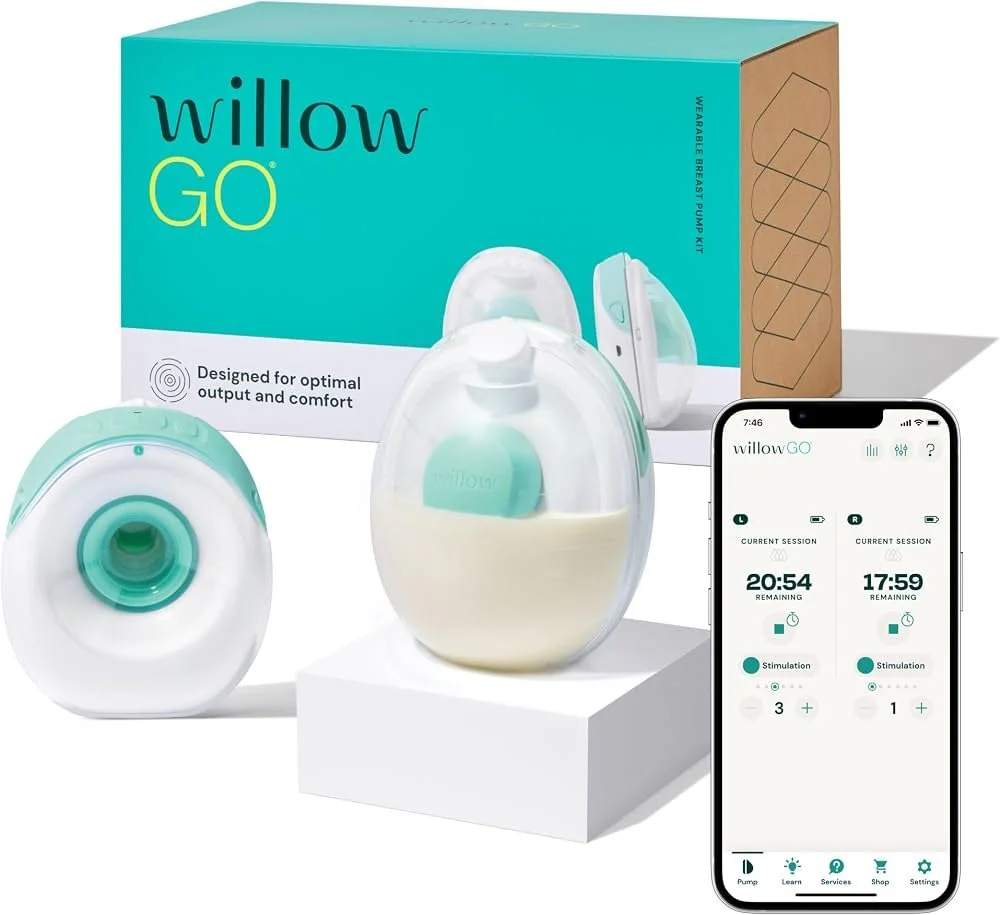
Willow develops wearable breast pumps and other breastfeeding products designed to make pumping more convenient and portable. Its hands-free, in-bra pumps helped establish an entirely new category of maternal health devices.
In March 2025, Willow acquired UK-based Elvie, another well-known maker of wearable breast pumps and pelvic health devices. The combined company has continued expanding its maternal health product portfolio, including additional breastfeeding and infant-feeding products.
Raised: $254 million in equity and debt financing
Backers: NEA, Meritech Capital Partners, Lightstone Ventures, Endeavour Vision, Perceptive Advisors
Founded: 2014
Founding team: Includes Josh Makower and Naomi Kelman
Midi Health

Midi Health provides virtual, insurance-covered healthcare for women, initially focusing on perimenopause and menopause. Its clinicians address symptoms including hot flashes, sleep problems, weight gain, and hormonal changes, with treatment options spanning prescription medications, lifestyle support, and preventive care.
Midi has expanded into a broader women's healthcare platform covering metabolic health, cardiology, sexual health, and other midlife conditions. In February 2026, the company raised a $100 million Series D, bringing total funding to about $250 million and valuing the company at over $1 billion.
Raised: $250 million+
Backers: Goodwater Capital, GV, Emerson Collective, Foresite Capital, Serena Ventures, McKesson Ventures
Valuation: $1 billion+ (2026)
Founded: 2021
Founders: Joanna Strober, Sharon Meers, and Jill Herzig
TMRW Life Sciences

TMRW Life Sciences develops technology to modernize the management and storage of frozen eggs, sperm, and embryos used in fertility treatments. Its platform combines robotics, digital tracking, and continuous monitoring to help fertility clinics reduce the risk of specimen mix-ups, damage, or loss.
Unlike consumer-facing fertility startups, TMRW sells technology and infrastructure to fertility clinics. The company received FDA clearance for its automated specimen management platform and has raised additional capital to expand adoption across fertility practices.
Raised: ~$220 million in reported financing, including a 2026 equity raise
Backers: 5AM Ventures, GV, Transformation Capital, Casdin Capital, Life Sciences Innovation Fund
Valuation: Not publicly disclosed
Founded: 2018
Founders: Alan Murray and Joshua Abram
Advantia Health

Advantia Health is an integrated women's healthcare company operating outpatient practices and technology-enabled care services. Its model combines OB-GYN services, primary care, and other specialties, using technology to coordinate care and improve the patient experience.
The company has expanded through acquisitions and partnerships with women's healthcare practices. Its portfolio also includes Pacify, a virtual maternity support platform that connects patients with maternal and infant health professionals.
Raised: ~$217 million, according to a 2026 PitchBook-based analysis
Backers: Deerfield Management, BlueMountain Capital Management
Valuation: Not publicly disclosed
Founded: 2014
Founders: Sean Glass and Dr. Peter Glass
Pomelo Care

Pomelo Care is a virtual healthcare company initially focused on improving maternal and newborn outcomes. The company partners with health plans and employers to provide continuous access to multidisciplinary care teams, including nurses, physicians, therapists, dietitians, and doulas.
Pomelo uses clinical data and proactive care management to identify pregnancy risks earlier and reduce preventable complications. It has since expanded into pediatrics, reproductive health, and menopause care. In January 2026, Pomelo raised $92 million at a $1.7 billion valuation.
Raised: $171 million
Backers: Stripes, Andreessen Horowitz, First Round Capital, Atomico, BoxGroup, SV Angel
Valuation: $1.7 billion (2026)
Founded: 2021
Founder: Marta Bralic Kerns
Tia

Tia offers comprehensive women's healthcare through physical clinics and virtual services. Its care model integrates primary care, gynecology, mental health, sexual health, and menopause treatment, aiming to reduce the fragmentation women often experience when navigating the healthcare system.
Tia began as a digital women's health platform before expanding into brick-and-mortar clinics. Unlike startups focused on a single condition or life stage, Tia is building a broader model for coordinated women's primary and specialty care.
Raised: ~$157 million
Backers: Threshold Ventures, Define Ventures, Torch Capital, ACME Capital, The Helm
Valuation: Not publicly disclosed
Founded: 2017
Founders: Carolyn Witte and Felicity Yost
Antiva Biosciences

Antiva Biosciences is a biotechnology company developing treatments for high-risk HPV infections and precancerous cervical lesions. Its lead product, ABI-2280, is an investigational vaginal treatment designed to clear HPV infections and potentially reduce the need for invasive surgical procedures that can affect reproductive health.
Founded in 2012, the company reported positive results from a Phase 1b/2 clinical trial in 2026, demonstrating improved HPV clearance rates compared with placebo. Antiva is working toward a less invasive approach to preventing cervical cancer.
Raised: Approximately $141 million
Backers: MPM BioImpact, GV, Canaan Partners, Sofinnova Investments, Adjuvant Capital, Lumira Ventures
Valuation: Latest valuation not publicly disclosed
Founded: 2012
Founder: Dr. Karl Y. Hostetler
Carrot Fertility

Carrot Fertility is a fertility and family-building benefits platform that partners with employers and health plans to help members access reproductive healthcare. Its services include IVF, egg freezing, adoption, surrogacy, pregnancy, and postpartum support, as well as menopause care.
Unlike fertility startups that operate their own clinics, Carrot connects members with a global network of providers while offering care navigation, financial benefits, and personalized guidance. The company has expanded beyond fertility to support members across different life stages, and now serves more than 1,000 employers and health plans worldwide.
Raised: $115 million
Backers: Tiger Global Management, U.S. Venture Partners, CRV, F-Prime Capital, OrbiMed, Uncork Capital
Valuation: Not publicly disclosed
Founded: 2016
Founders: Tammy Sun and Dr. Asima Ahmad
What these companies tell us about women's health
It's encouraging to see large companies emerging across such different parts of women's health. Fertility and maternity care still account for a significant share of investment, but the success of companies like Midi and Flo shows that investors are also backing businesses focused on menopause, preventive healthcare, and consumer health.
At the same time, raising hundreds of millions of dollars is not the same as building a sustainable business or improving patient outcomes. Some of the most important opportunities in women's health may ultimately come from smaller companies solving problems that have received relatively little attention or investment.
The market is much bigger than fertility and pregnancy, and there's still a lot of work to do.
